Night inspection rounds
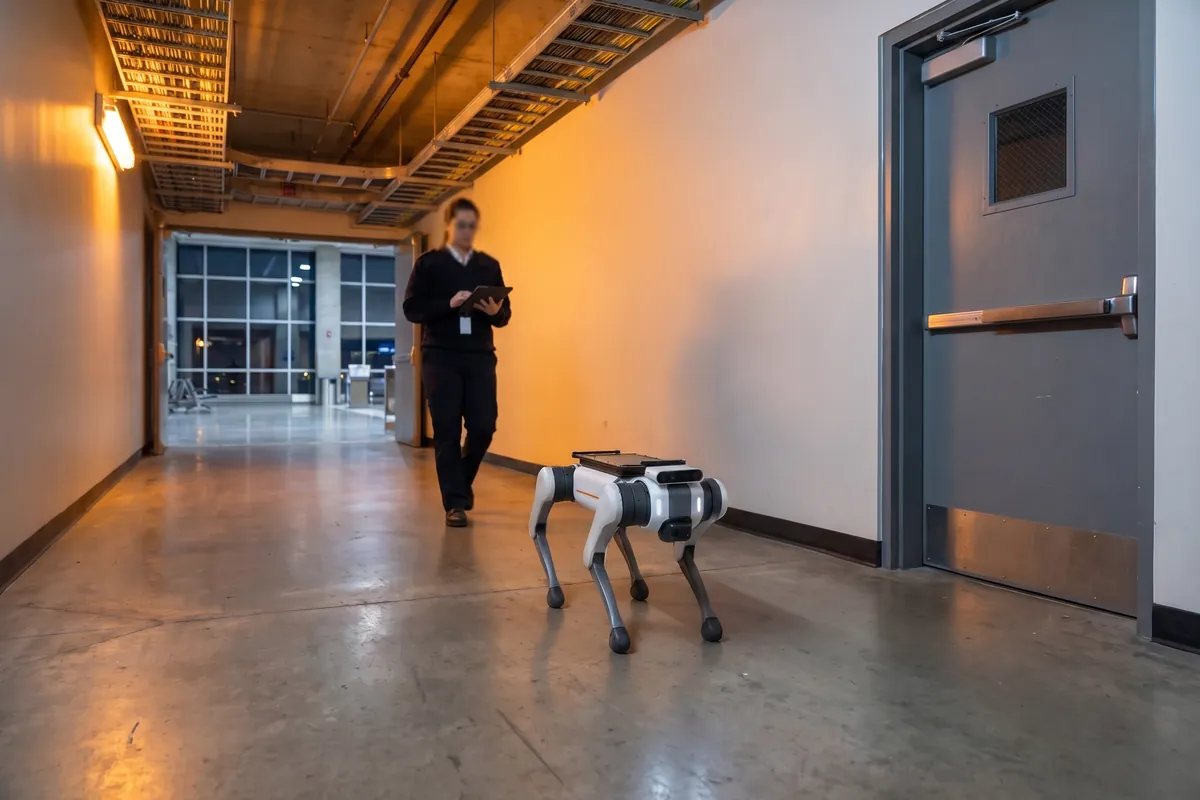
Walk an agreed route through a concourse or service corridor while the terminal is quiet. Check fire doors, exits and walkways, with a timed photo at each stop. The duty manager decides what needs action.
Terminals, concourses, baggage areas and back-of-house corridors are checked through the night by small teams, and robots from different makers are arriving for cleaning, wayfinding and inspection, each with its own app. Cereal's site mind puts them on one live map, under one set of rules for who may command which robot in which zone, with one record the airport owns.
For airport operations, terminal facilities and security teams
Start landside and after hours: a supervised round of a back-of-house corridor or a quiet concourse that reports blocked exits, propped doors, spills or items left behind to the duty manager. Robots stop where the airport's rules say: at airside boundaries, security screening, baggage conveyors and wherever crowds are heavy. Each robot, route and zone needs its own assessment and supervised validation.
Walk an agreed route through a concourse or service corridor while the terminal is quiet. Check fire doors, exits and walkways, with a timed photo at each stop. The duty manager decides what needs action.
An officer walks with the robot, or asks it for a look at a door, a stairwell or a staff-only corridor. Patrols a robot walks on its own are planned, not available today. The robot reports what it sees; it does not challenge people, respond to alarms or replace screening.
Many airports already run cleaning, delivery or wayfinding robots from their makers. Running them on one map, so they don't meet head-on in a service corridor and the cleaning team sees which areas are done, is planned and tested before it is offered.
Cereal does not build or sell robots. The site mind runs the robots a site already has, or off-the-shelf robots it picks from their makers, on one live map, with one record the site owns and one set of rules for who may command what. Site context is designed to outlast any one robot. A new robot still needs a supported integration, localization, permission review and validation of its skills. In a real run, one voice request ran a robot dog and robot arms from two different makers on one job, taking turns.
Watch the two-robot run → Robots from different makers on one site →Start small enough to learn what works. Expand only after the team and the site owner review the results.
Read about permissions and privacy →Airside and landside have different rules. Agree which zones a robot may enter, at which hours and under whose escort. The site mind does not pass a badge reader, open a door or call a lift today; staff handle them until any integration is tested.
Start when the terminal is quiet. Agree speeds, where the robot waits at peak times and how anyone can stop it. Keep it clear of queues, boarding gates and step-free paths.
Expect reviews by airport security, IT and safety, and by your regulator where needed. Agree what the camera may record, who can view it and how long anything is kept: passengers have not agreed to be filmed.
A pilot should answer a real question for you. Record the starting point, test the agreed workflow and review where it helped or needed intervention.
Only where the airport approves it, under the escort, badge and vehicle rules that apply there. Pilots start landside or in back-of-house areas, with a person present.
No. Baggage systems and their conveyors stay off the route, and a robot does not move, scan or track bags.
Not today. Guiding passengers through a robot needs agreed wording, languages, accessibility and privacy rules, tested in quiet hours first.
Tell us about your terminal, the robots you run or plan to run and the round you want to improve. We scope setup, support and any integrations with you. Cereal charges a monthly fee per robot the site mind runs. Cereal does not sell robots; pricing and timing are agreed before any commitment or charge.
Tell us the robots you run or plan to run. Suitability, supported tasks, timing, pricing and support are agreed before anything is charged.