Robots get hired where someone has to sign the log.
Every robot that enters a building will be asked the same four questions before it is allowed to work: who is it, where may it go, who does it call when it is unsure, and what did it do. In a regulated facility those questions are not philosophy. They are the conditions of the contract, and someone on staff is paid to check the answers. That is why the site mind goes first to the floors where accountability is already mandated: care facilities, then hospitals and logistics, then factories, data centers, energy, and defense installations.
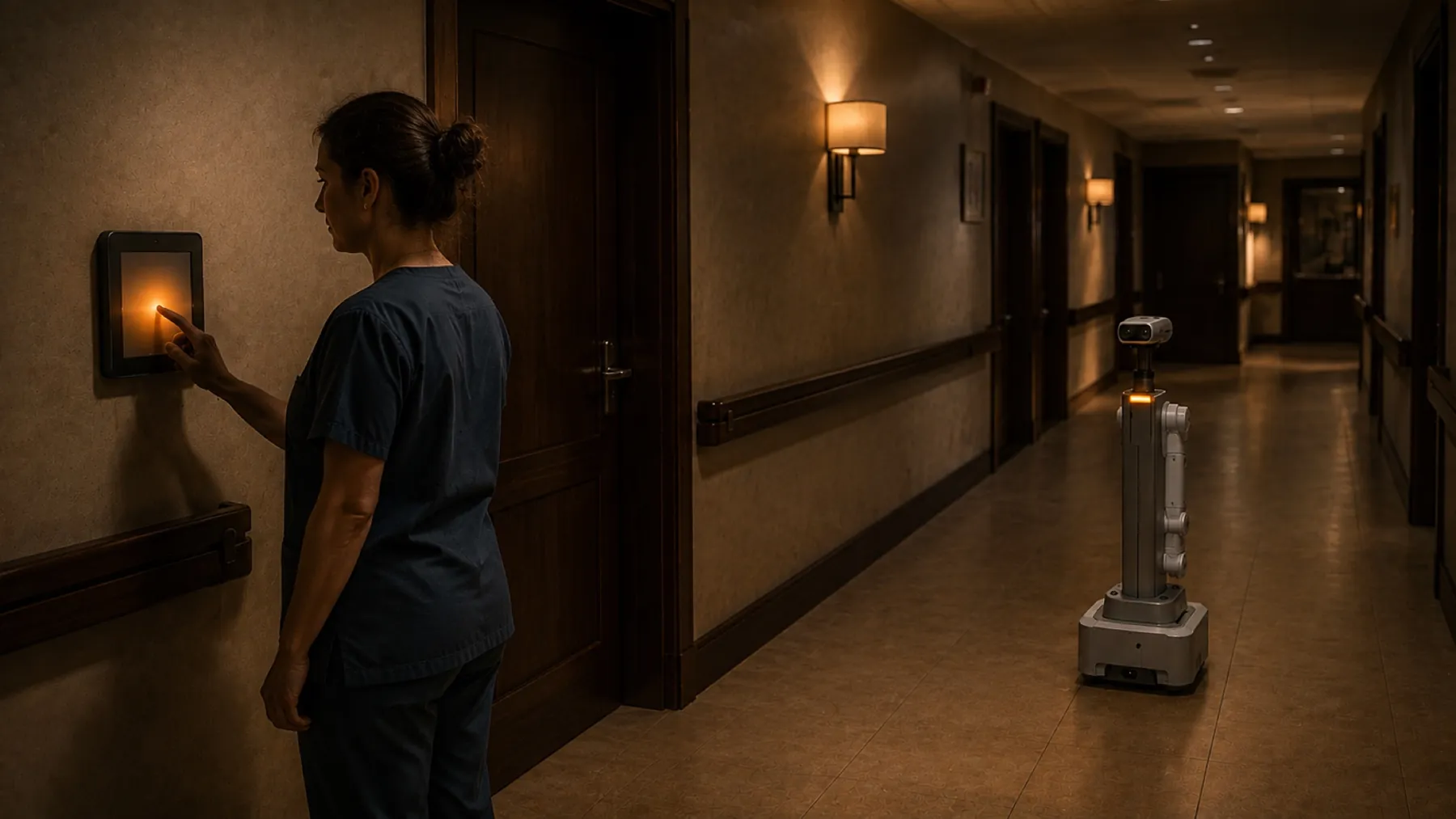
Four things before the first task
An identity for the machine, so the log names one robot and not a fleet. Room-level permissions enforced in code, so a corridor it has not been granted is a wall. A human on the escalation path, so uncertainty has somewhere to go other than a guess. And an attested record of every action, request, and outcome that the site can hand to a surveyor without editing it first. Body makers do not sell this; a maker can only vouch for its own body, and every building will run three. Model companies do not sell it either; a model cannot be the thing that restricts and records itself. It is the layer between a sixteen-thousand-dollar body and a floor where one incident costs twenty-five thousand and a lawsuit costs the contract.
The same four jobs on every floor
Transport between stations: carts, supplies, samples, meals, linens, the trips that eat a shift. Floors and aisles kept clear, dry, and unobstructed, with the spill caught before the incident report. Staging on schedule, every hand-off logged. Rounds and presence, the same eyes in the same rooms every shift, noticing change and calling a person. Deliberately mundane, because the mundane is what burns out staff, and because mundane work is what a supervisor can certify and a surveyor can count.
The buyer already has a line for it
A care operator prices a loaded staff member at around sixty thousand dollars a year, budgets close to forty-eight thousand a year for technology per thousand residents, and absorbs around twenty-five thousand each time a fall sends a resident out of the building. Those are operator-reported numbers, not ours. A supervised robot that does the transport trips and logs every one sits inside a line the operator already has, on an annual site contract, with no capital cost to the site. The first thirty days run supervised, and what the site sees each week is the task count, the intervention rate, and the record. A business that can be checked from the outside in a month is the kind we want to be in.
One mind, any body
The site mind is one intelligence that runs, gates, and records every robot in the building, above whatever body is on the floor and whatever motor model is rented this quarter. Bodies are bought, not manufactured. The motor brain is integrated only if it passes our gate. Safety is deterministic code beneath the mind, and the model never holds safety authority. Skeletons, not video. Supervised from day one, with autonomy earned skill by skill, and every skill answering to the same four questions. The runtime is public: one mind moving a task between two bodies, every action attested, reproducible on a laptop.
Robots get hired where someone has to sign the log. We built the layer that makes the log worth signing.