What would your robots do in your space?
Cereal is software. The site mind runs robots from many makers in one building: one live map, one record the site owns, and who may command what, for a monthly fee per robot. We start with airports, hospitals, data centers, chip fabs, mining, construction sites, warehouses and hotels. Start with the work and the place you know.
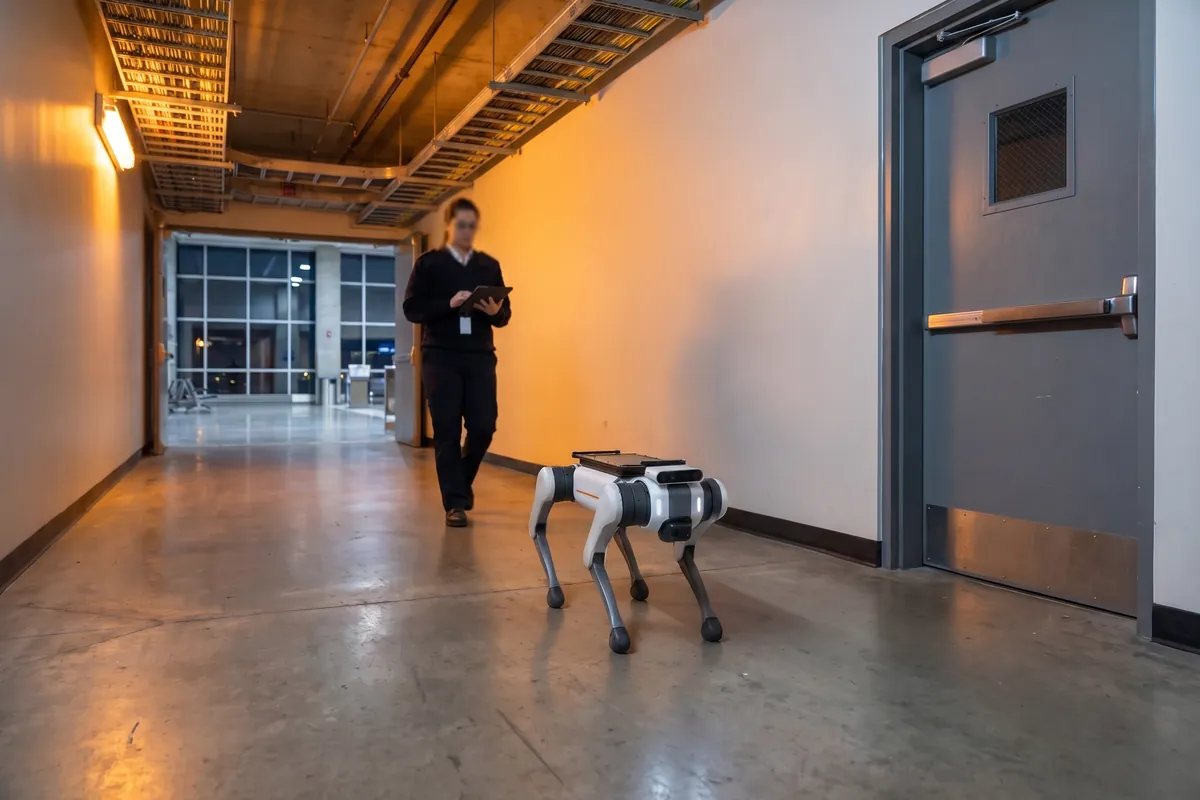 Airports
Robots in your terminal. Every round on one record.
Start landside and after hours: a supervised round of a back-of-house corridor or a quiet concourse that reports blocked exits, propped doors, spills or items left behind to the duty manager. Robots stop where the airport's rules say: at airside boundaries, security screening, baggage conveyors and wherever crowds are heavy. Each robot, route and zone needs its own assessment and supervised validation.
Explore airports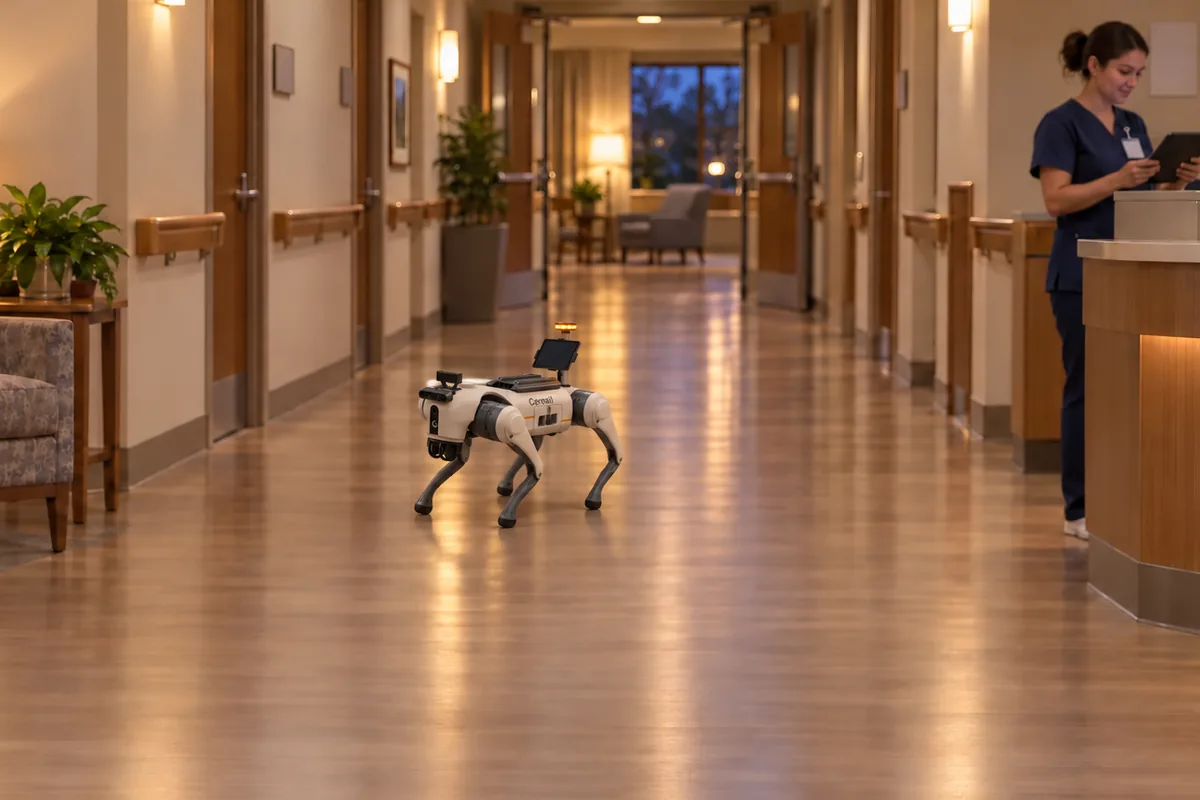 Hospitals & care facilities
Robots on your hospital floor. One record your surveyor can read.
Start with checks your staff already do: a supervised walk of an agreed corridor that reports blocked fire doors, obstructions or a wet floor to the nurse station. The site mind runs robots the hospital already has or picks from makers; each one needs its own site assessment, privacy rules and supervised validation. It does not monitor patients or residents, detect falls or provide care.
Explore hospitals & care facilities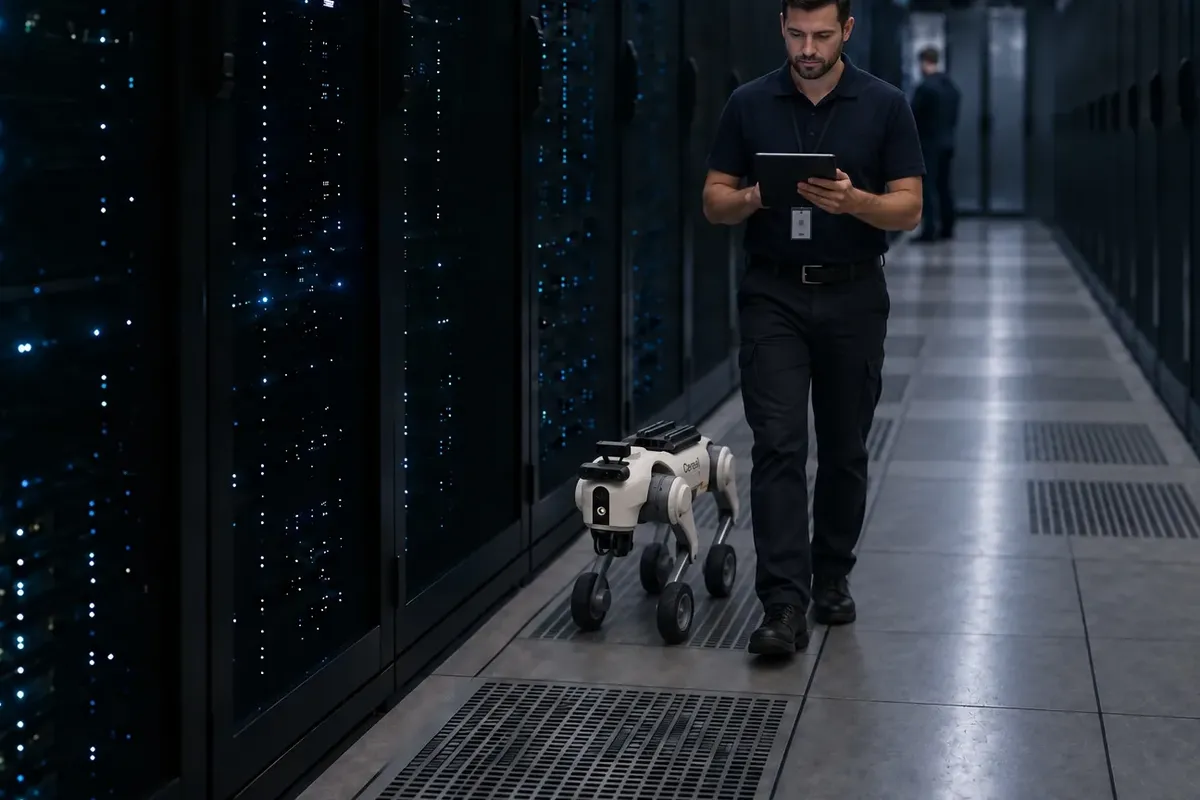 Data centers
Robots in your data hall. Every round on the record.
Start with rounds your technicians already walk: a supervised pass down agreed aisles that photographs rack status lights, an open cabinet door or something left in the aisle. Robots stay out of customer cages unless the customer allows it, and they never touch equipment.
Explore data centers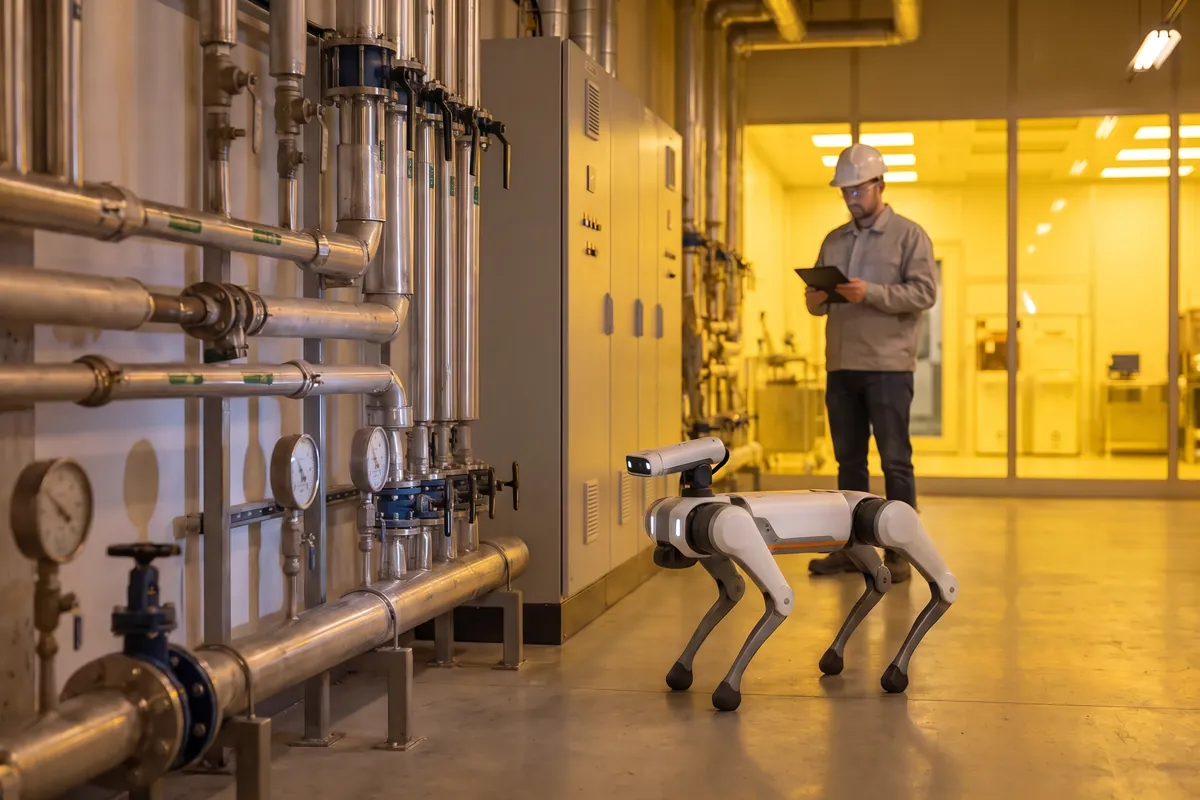 Chip fabs & manufacturing
Robots around your fab. Out of the tool bays.
Start outside the clean room: support corridors, warehouses and utility areas, where a robot can carry parts or walk a gauge-reading round. Inside the clean-room tool bays, wafer handling stays with the tools and the automated material handling system (AMHS) built for it; a robot goes there only if it meets that area's class and the fab approves it. Hazmat areas are no-go zones on the map.
Explore chip fabs & manufacturing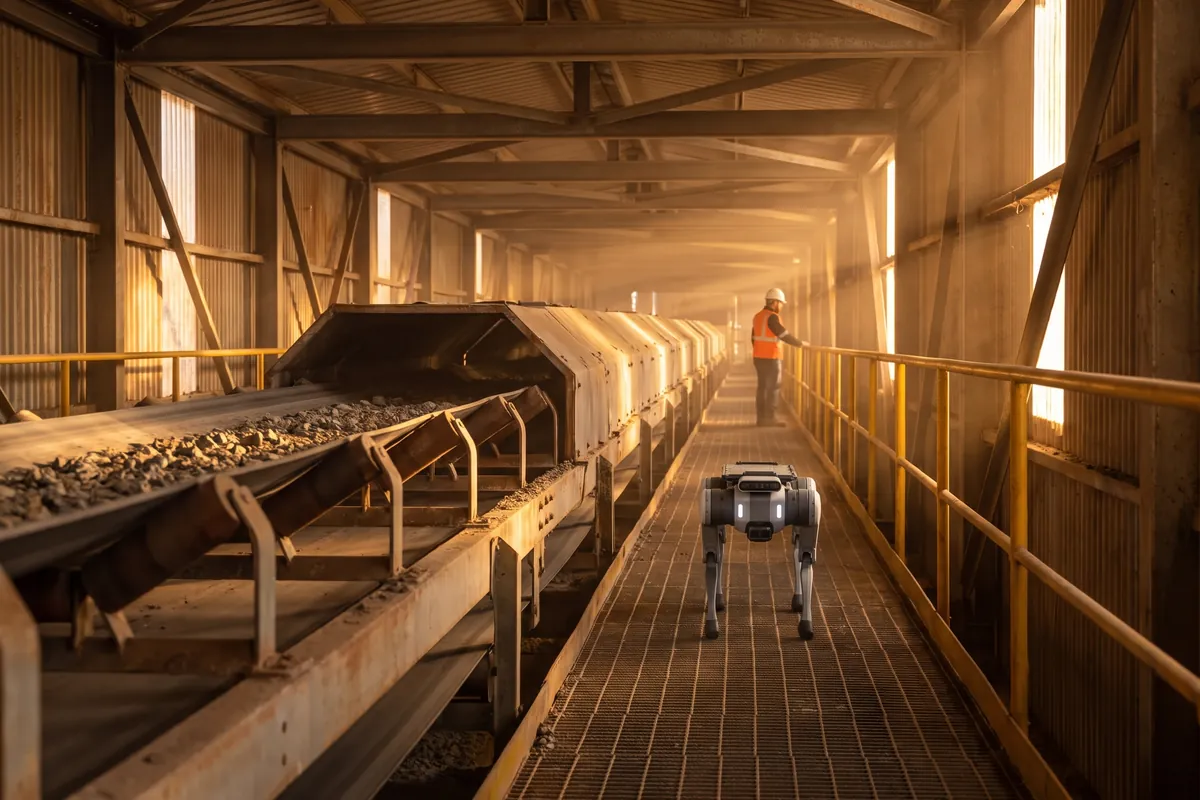 Mining
Robots at your mine. Eyes where people shouldn't linger.
Start with rounds people walk today in places they would rather not linger: a plant floor, a conveyor gallery, a pump station. A robot walks the agreed route, photographs the same points and reads visible gauges when asked, so a person sees the result without making the trip. Underground work, gassy areas and active faces need robots rated for them and the mine's own approvals.
Explore mining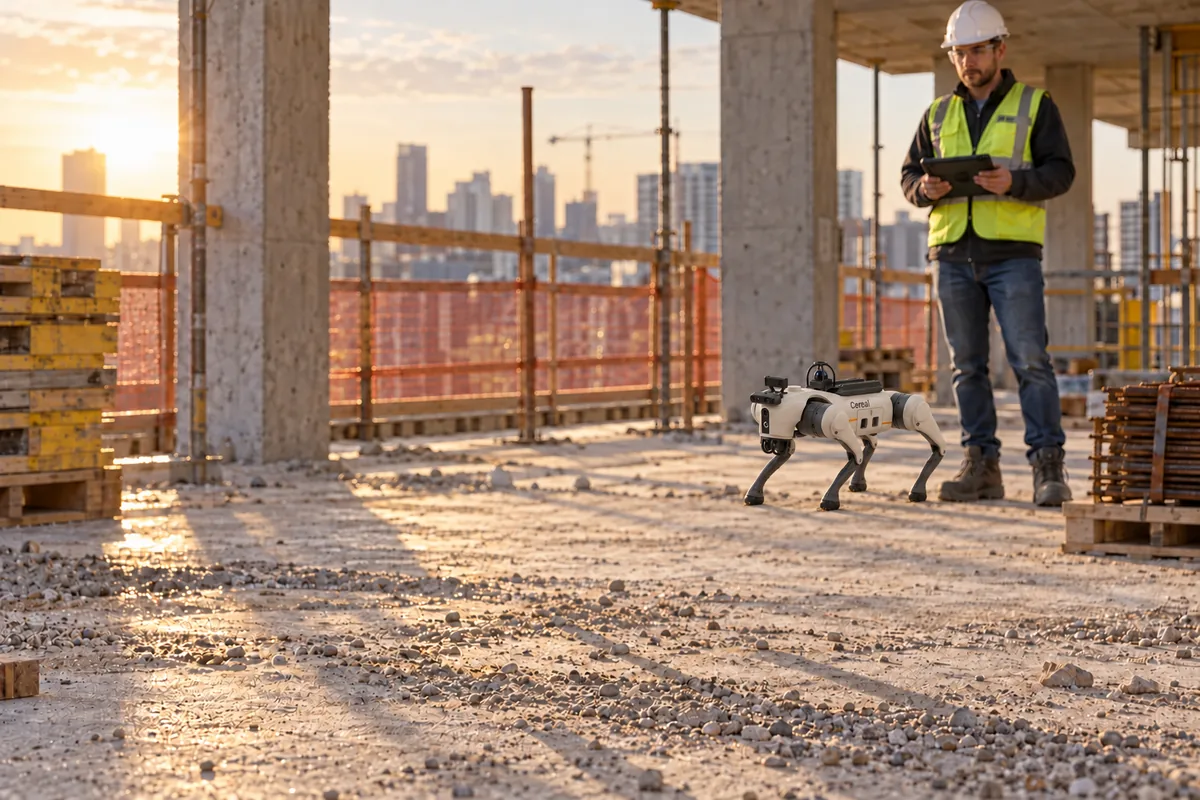 Construction sites
Robots on your site. The same walk, every evening.
Start with repeatable documentation: a supervised walk at the end of the day that takes progress photos from the same points and notes visible issues for the site manager. Uneven ground is where a four-legged robot is useful, but every site and every robot needs its own assessment. Construction workflows need validation on your site and in your conditions.
Explore construction sites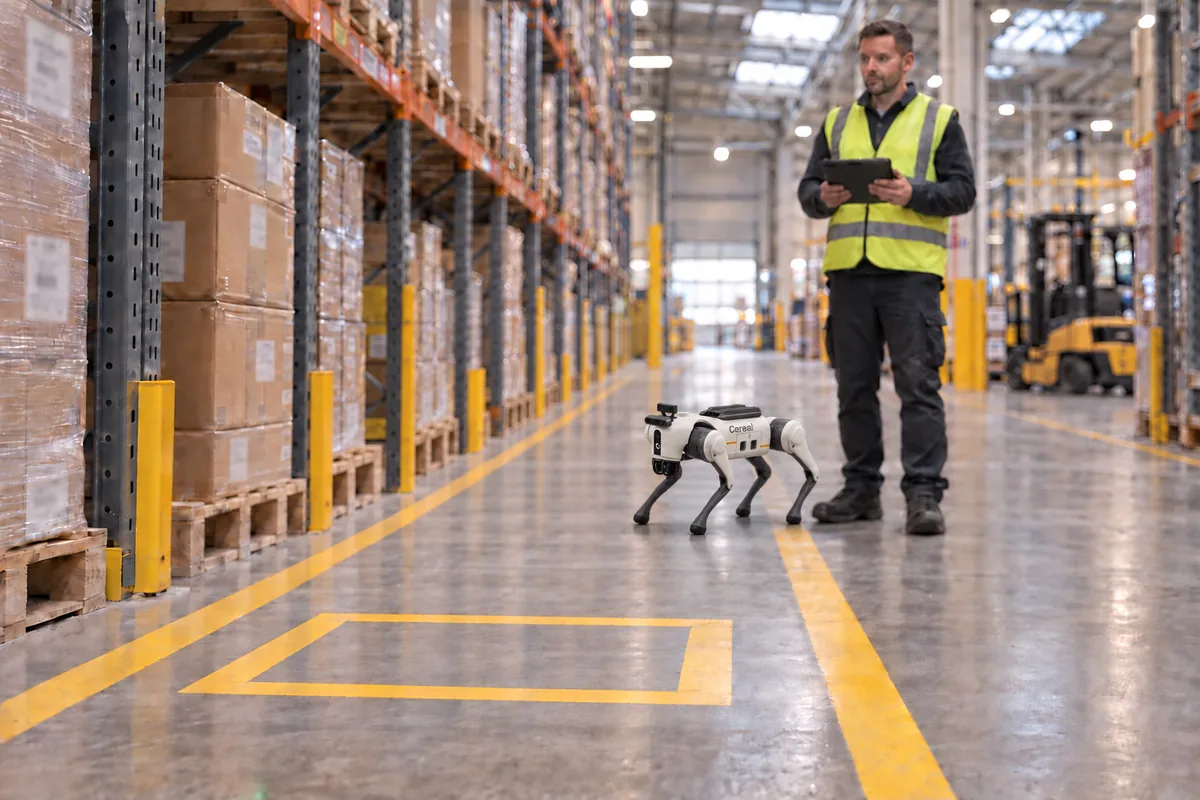 Warehouses
Robots in your warehouse. Context beyond the aisle.
Start with observation and a person responsible for the outcome. A supervised pilot might check a staging area, a passage or a loading-area boundary and report what is visible. Dependable warehouse inspection requires validation against your layout, traffic and operating conditions. Running transport robots the site already has on the same map and record is planned.
Explore warehouses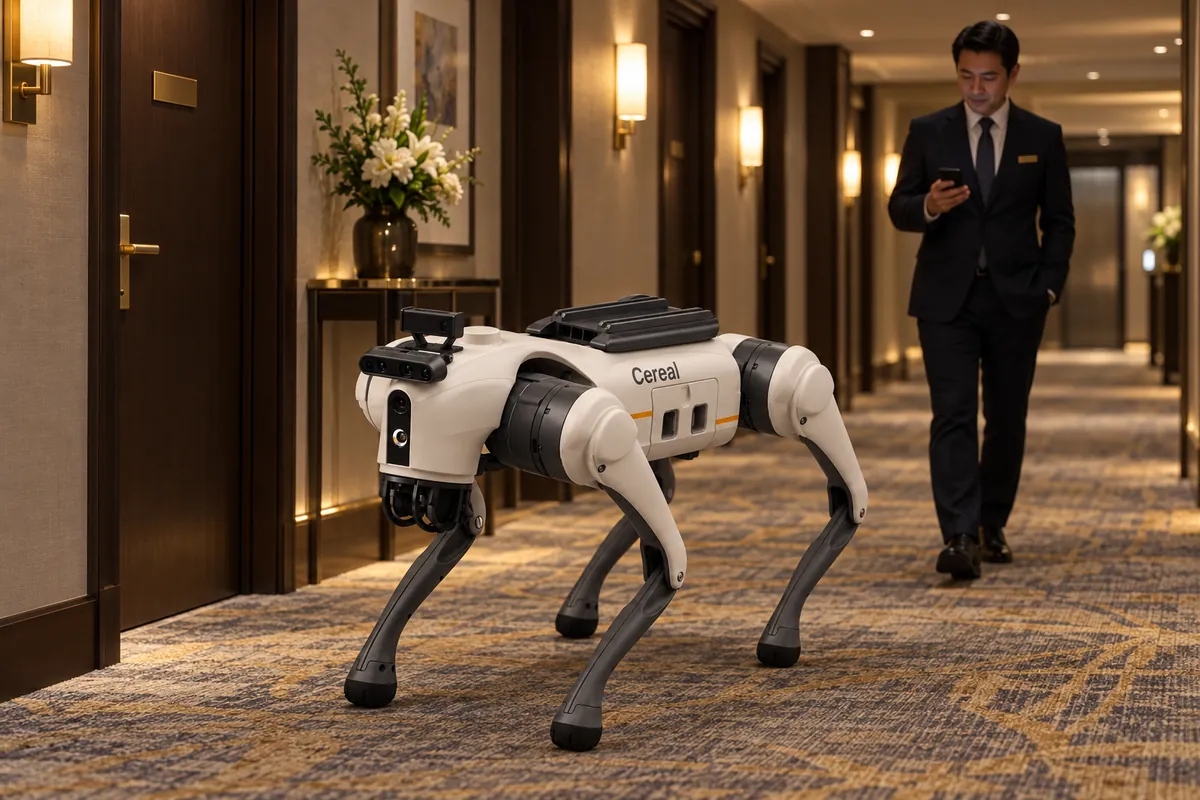 Hotels
Robots in your hotel. Quiet night walks, a clear record.
Start with checks your team already does: a supervised night walk of one guest floor or back-of-house corridor, reporting trays left out, a propped fire door or a spill to the duty manager. Running delivery robots from their makers on the same map is planned, not available yet. Hotel workflows need their own site survey and validation.
Explore hotels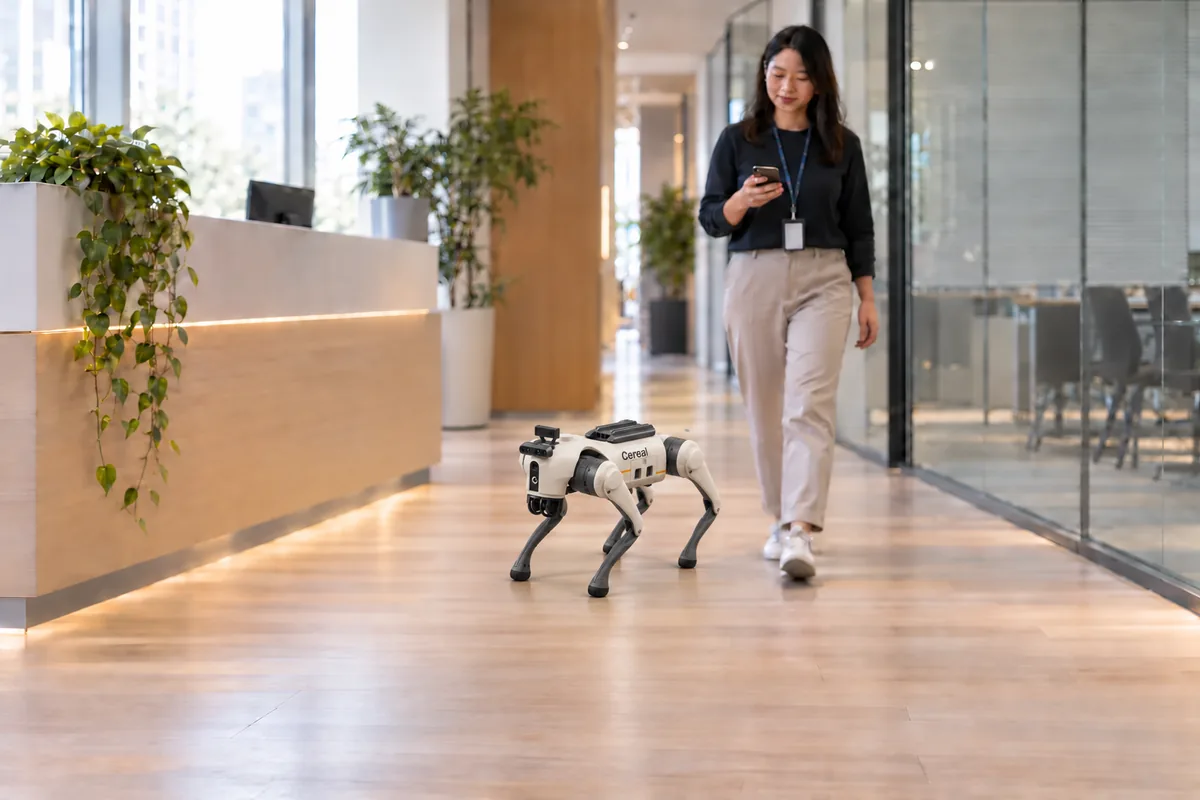 Offices
Robots in your office. A site mind that knows the place.
Start with a small, useful route: a robot accompanies a facilities operator through shared areas, and the site mind describes what it can see when asked. Then evaluate repeatable room checks and the information your team needs afterward. Office workflows need their own site assessment and supervised validation.
Explore offices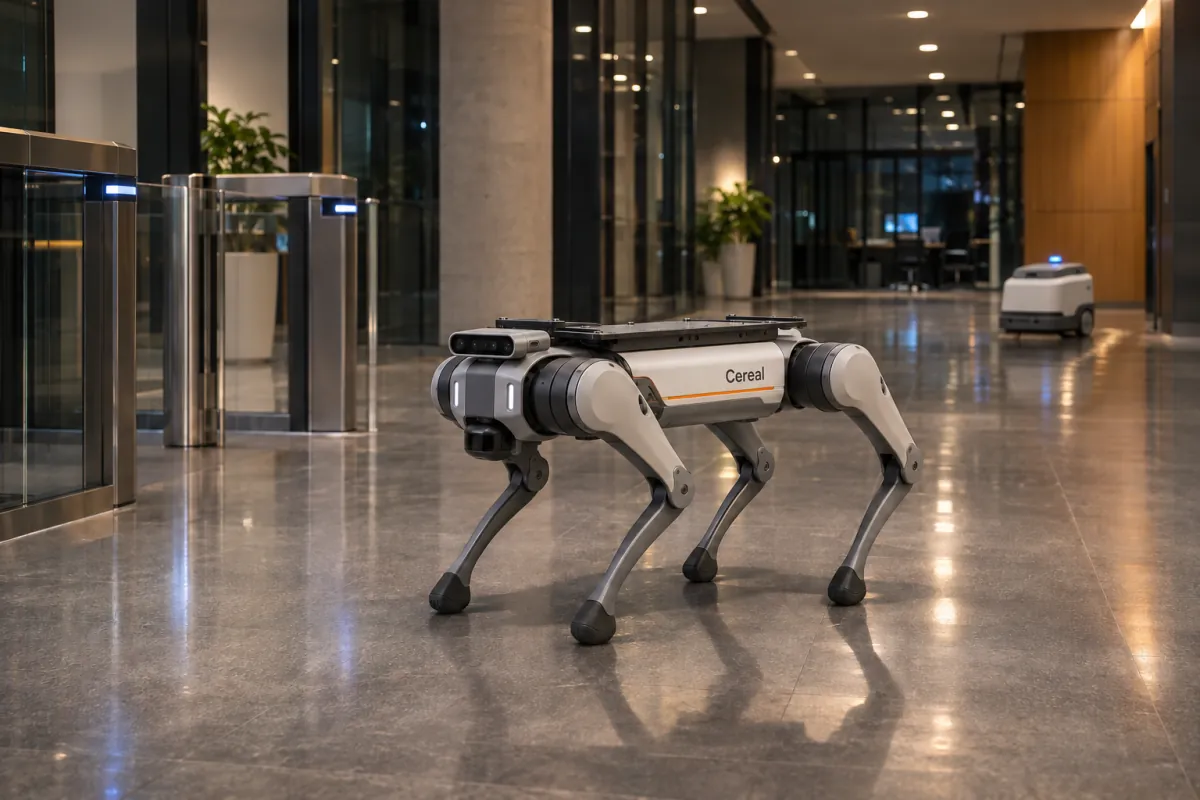 Building security
After-hours patrols, with your guard in charge.
Start with the route your team already walks: a supervised after-hours route, with a photo at each stop that matters, such as a door left open, a propped fire door or a blocked exit. Patrols a robot walks on its own are planned, not available today. Security workflows need their own site survey and validation, and Cereal does not replace guards, alarms or emergency response.
Explore building security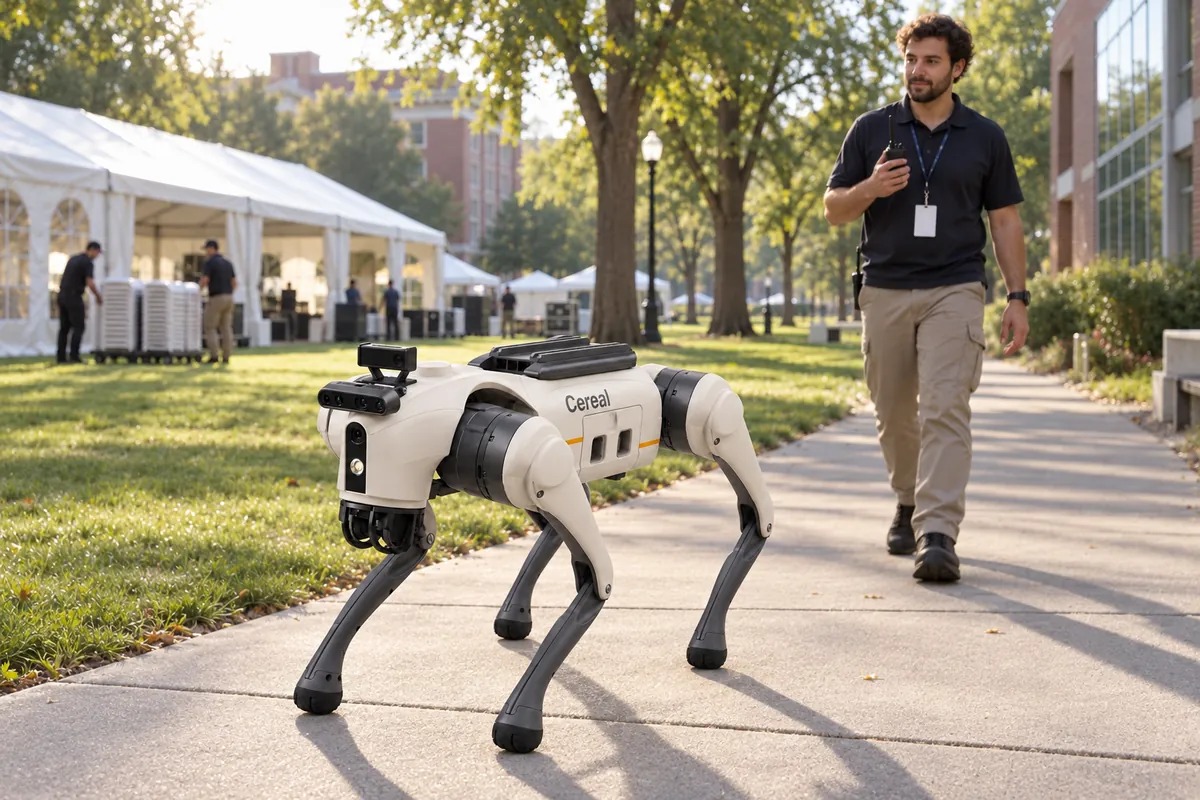 Campuses & venues
Robots on your campus. Another pair of eyes on the route.
Start with route checks your operations team already does: a supervised walk of an agreed path before an event opens and after it closes, reporting blocked paths, open gates or items left behind. Outdoor routes, weather, crowds and each maker's robot need their own assessment and validation.
Explore campuses & venuesYour robots. One site mind.
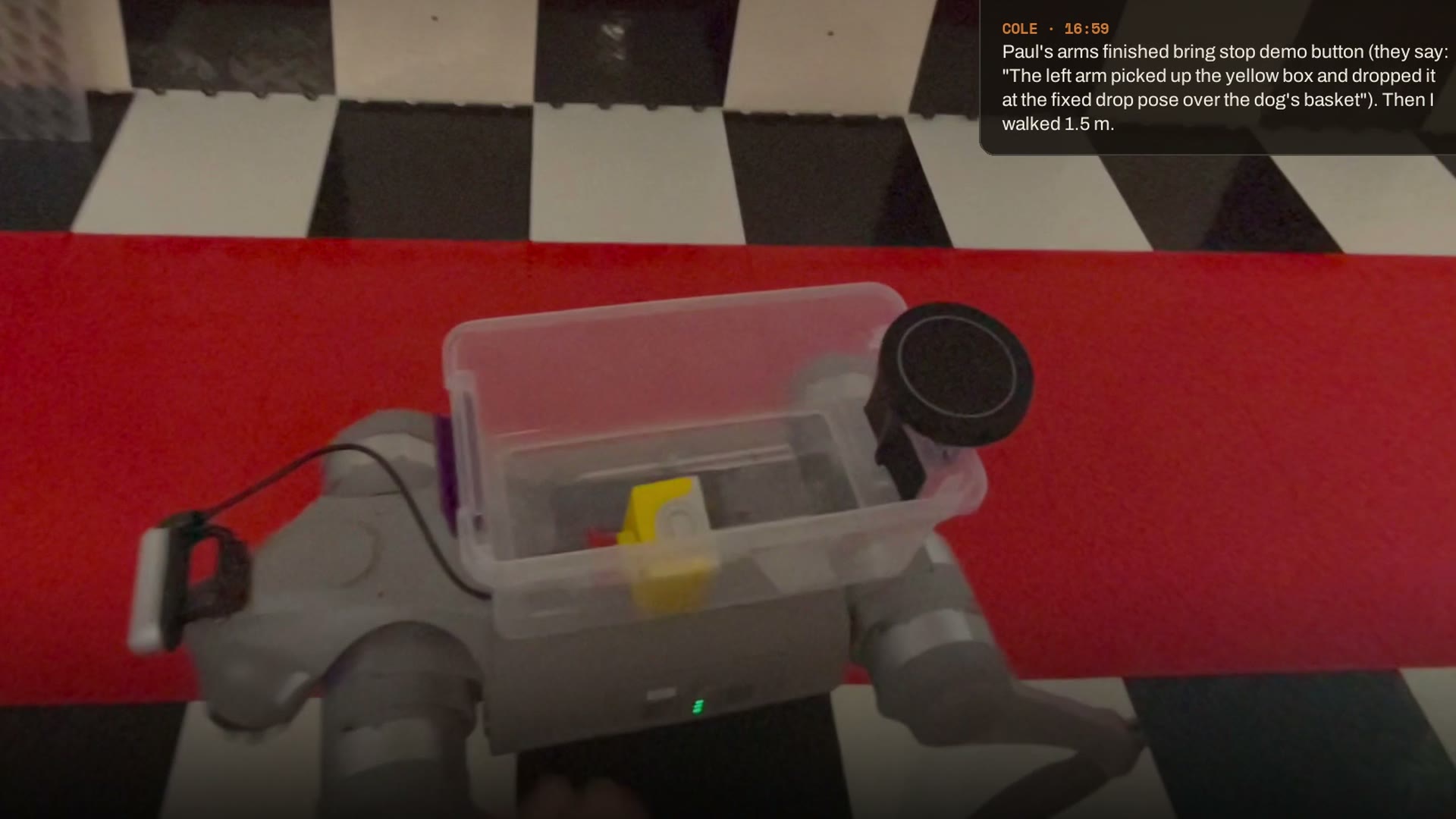
Cereal does not build or sell robots. The site mind runs the robots a site already has, or off-the-shelf robots it picks from their makers, on one live map with one record and one set of rules for who may command what. Each robot still needs a supported integration, localization, permission review and validation of its skills before it takes a task.
 Real footage · two makers, one jobWatch the two-robot run